
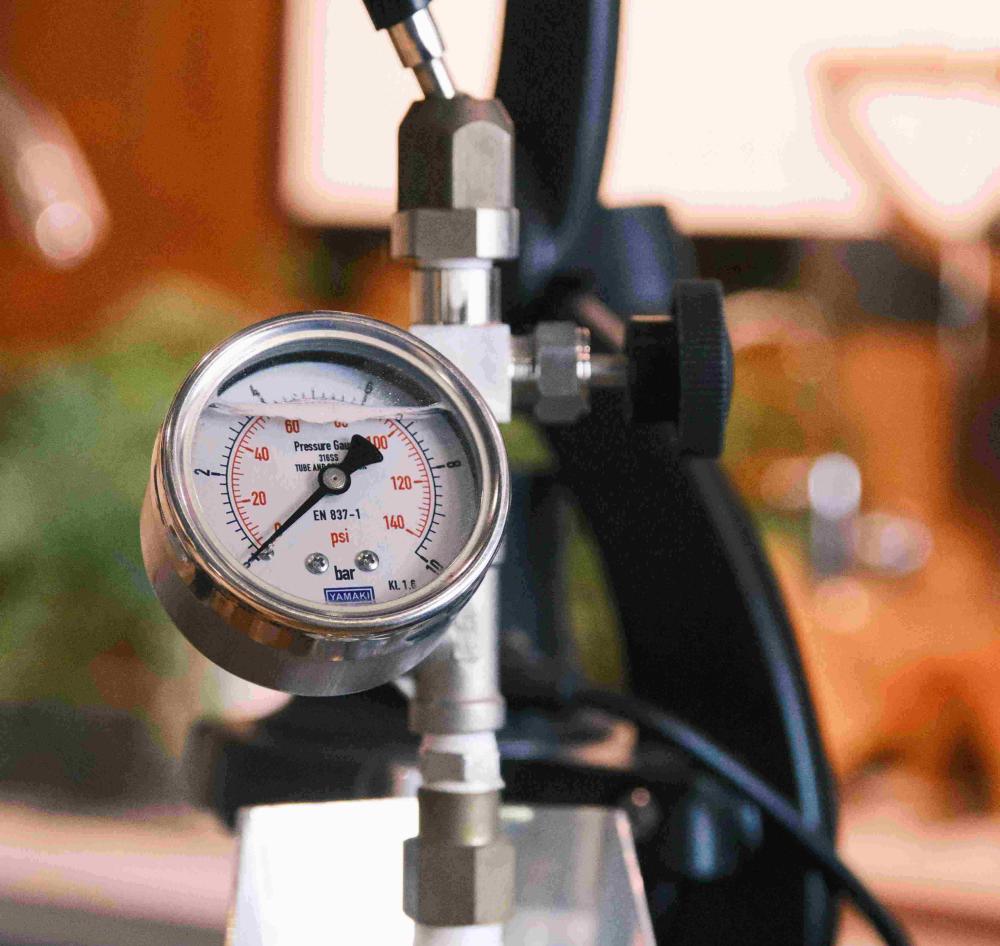
How to Choose the Right Pressure Gauge
Selecting the correct pressure gauge is essential for accurate measurement, equipment safety, and long-term reliability. Choosing the wrong gauge can result in inaccurate readings, premature failure, or safety risks.
Here are the key factors to consider when selecting a pressure gauge:
1. Pressure Range
The gauge range should be approximately 1.5 to 2 times the normal operating pressure. Operating a gauge continuously at maximum range reduces lifespan and accuracy.
For example, if your system operates at 6 bar, selecting a 0–10 bar or 0–16 bar gauge is recommended.
2. Accuracy Requirement
Standard industrial pressure gauges typically have accuracy classes such as 1.6% or 1.0%. For critical applications, higher accuracy gauges may be required.
3. Connection Type
Common connection types include:
- Bottom connection
- Back connection
- Threaded (BSP or NPT)
- Flanged connections
The connection must match the installation point.
4. Dial Size
Common dial sizes include 2 inch, 4 inch, and 6 inch. Larger dial sizes improve readability from distance.
5. Application Environment
For vibration or pulsation conditions, glycerin filled pressure gauges are recommended. For corrosive environments, stainless steel construction may be required.
6. Temperature Conditions
High temperature environments may require special materials or accessories such as syphons or diaphragm seals.
Choosing the correct pressure gauge improves safety, accuracy, and system performance.
For assistance in selecting the right pressure gauge for your application, contact ESBTINST today.